Does your child successfully memorise a word on a flashcard, only to stare blankly at that same word when it appears in a different font in a storybook?
In the diverse visual landscape of modern classrooms, this hidden struggle is often a lag in Visual Form Constancy.
The Pillar of Recognition: What is Visual Form Constancy?
Following our discussions on Visual Spatial Relations and Visual Sequential Memory, we arrive at the third pillar of visual processing: Visual Form Constancy.
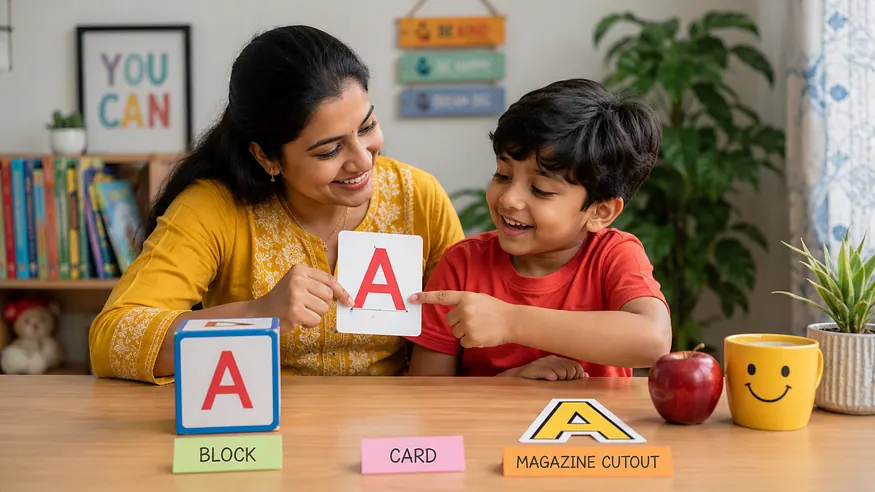
This is the neurological ability to recognise that an object, shape, or symbol remains the same even if it is resized, rotated, flipped, or placed in a new environment.
For a neurotypical adult, the letter “A” is recognised instantly, whether it’s in Times New Roman, messy cursive, a giant billboard, or a tiny prescription label. Your brain generalises the shape. For a child with a lag in this area, the brain treats every variation as a brand-new symbol that must be decoded from scratch.
The “Starting Over” Tax in Reading
In early education, this lag creates a profound barrier to reading fluency.
A child may practice the sight word “the” fifty times on block-letter flashcards until they know it perfectly. But the next day, when they see “the” in a stylised, italicised serif font, their brain doesn’t recognise it.
They are forced to sound it out all over again. This “Starting Over” Tax consumes their Working Memory, leaving zero cognitive space for actually comprehending the story. They aren’t “forgetting” words; their brains are failing to categorise visual data.
The Digital Strain: Analogue to Screen
While some form constancy issues are developmental, the modern environment exacerbates the struggle. Children today constantly switch between tablets, smartboards, and printed worksheets. This rapid visual shifting demands a robust processing system. When the brain can’t keep up, it results in task avoidance, reading fatigue, and a rapidly drained “social battery.”
The Barker Hypothesis: Programming Cognitive Flexibility
According to the Barker Hypothesis, early childhood conditioning acts as the biological blueprint for adult capability.
If a child spends their peak developmental years (ages 5–12) in a state of constant visual confusion, unable to generalise information, it can program the adult brain for rigid thinking, environmental anxiety, and cognitive fatigue. Building robust visual form constancy today acts as a “neurological vaccine,” ensuring lifelong adaptability and fluid navigation of the world.
The Stakeholder Blueprint: Home, School, and Clinic
For Parents: The “Shape-Shifting” Home
• The “Find the Letter” Hunt: Pick one letter or sight word. Find it in the real world in four different formats: a Stop sign (bold), a soup can (stylised), a greeting card (cursive), and a tablet (digital). This trains the brain to group varied shapes into one concept.
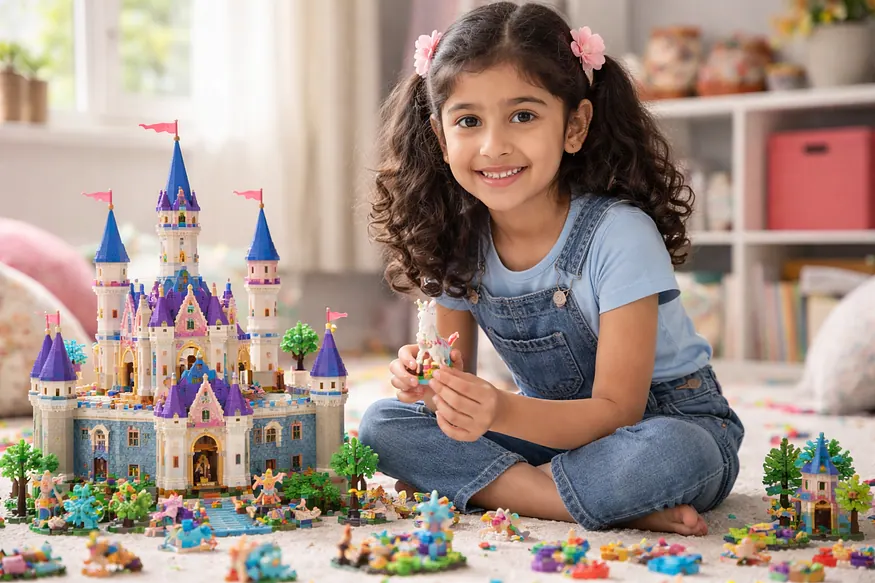
• Size and Sorting Play: Use blocks or Legos. Have your child sort items by general shape regardless of size (e.g., “Put all the squares here, from the tiny ones to the huge ones”). This provides the tactile Proprioceptive feedback needed to anchor the visual concept.
For Educators: Classroom Accommodations
• Font Consistency: If a child is struggling, ensure their spelling lists, reading materials, and math worksheets use the same clean sans-serif font (like Arial). Eliminate italics and stylised headers until fluency stabilises.
• Explicit Cursive Mapping: Don’t assume a child will “see” the connection between print and cursive. Explicitly teach how the printed letter maps to its cursive counterpart.
For Paediatricians: Screening the “Inconsistent” Reader
• The Generalisation Audit: Standard eye charts do not catch this. A clinical screening involves “Figure-Ground” and “Form Constancy” tasks, such as finding a specific geometric shape hidden inside a larger, complex drawing. If a child fails these matching tasks, they should be referred to a Developmental Optometrist or Pediatric Occupational Therapist (OT).
Parent’s Observation Checklist
• Context Confusion: Do they know a math concept on their homework, but fail to recognise the same problem on the classroom whiteboard?
• Font Frustration: Do they refuse certain books because the text “looks weird,” even if the reading level is correct?
• The “Starting Over” Loop: Do they sound out a word on page one, then struggle with the same word on page two?
• Angle Sensitivity: Do they struggle to recognise familiar places or objects if approached from a different angle or in different lighting?
When to Seek Professional Review
• Reading remains word-by-word and “robotic” despite months of practice.
• The child experiences headaches or eye-rubbing, specifically when reading new materials.
• There is a massive gap between what they understand when listening to and what they understand when reading.
• Standard tutoring isn’t working, and the child is beginning to feel “not smart.”
FAQ
1. Is this an eyesight problem?
No. A child can have 20/20 vision and still struggle. The eyes see the image perfectly, but the brain fails to categorise it correctly.
2. How is this different from Visual Spatial Relations?
Spatial Relations is about direction (knowing ‘b’ from ‘d’). Form Constancy is about generalisation (knowing a giant cursive ‘B’ is the same as a tiny printed ‘b’).
3. Will they just grow out of it?
While some improve with age, many children simply exhaust themselves trying to memorise every variation. Functional therapy fixes the underlying “generalisation engine” so the brain doesn’t have to work so hard.
The SKIDS Shield
Traditional check-ups focus on what a child can read on a chart; they miss how the brain adapts to the real world. SKIDS Advanced Discovery audits the “Generalisation Engine.” We help you identify “Context Confusion” before it drains your child’s love of learning.
[Explore SKIDS Advanced Discovery: The Path to a Smart Super Kid]