Visual Closure in Kids: Reading Speed & Focus Guide
Does your child painstakingly sound out every single letter of a familiar word, even when they’ve seen it dozens of times? Before assuming they lack reading comprehension, consider their visual processing.
Many students struggle with Visual Closure, the hidden cognitive skill that allows the brain to rapidly “fill in the blanks” for fluid reading.
Understanding Visual Closure in Children
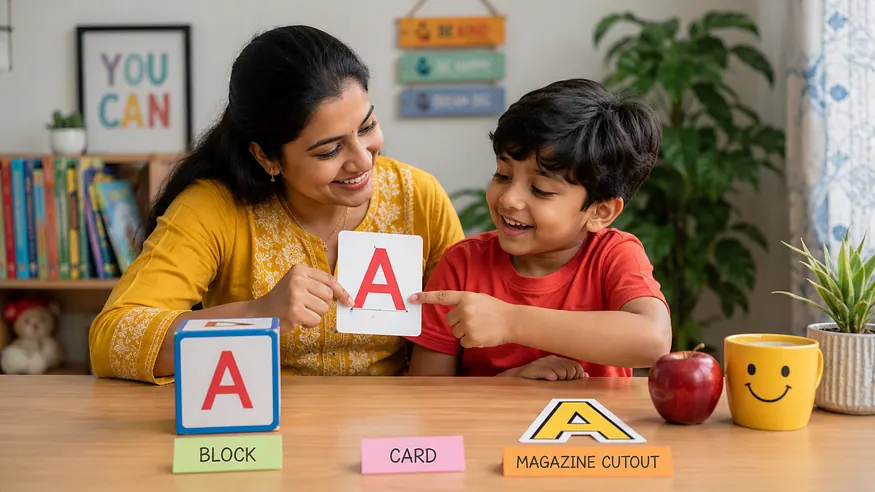
Building upon our recent explorations of Visual Spatial Relations and Visual Form Constancy, we arrive at the true engine of reading speed: Visual Closure. This is the neurological ability to recognise a complete object, word, or symbol, even when only a portion of it is visible.
When a neurotypical adult reads, they don’t look at every individual letter. The brain captures the first few letters and the overall shape of the word, instantly “closing” the visual gap to identify it.
For a child with a lag in visual closure, the brain demands 100% visual confirmation of every single detail before it can process meaning.
The Slow-Reading Tax
In the classroom, this invisible lag creates a profound barrier to reading speed and comprehension:
- The Mechanical Trap: Because the child cannot “skim” or rely on visual context clues, they must slowly decode every letter.
- Working Memory Depletion: By the time they reach the end of a long sentence, their brain is entirely exhausted from the mechanical effort of reading.
- The Comprehension Illusion: With zero cognitive space left to actually understand the story, this issue is often mislabeled as a “comprehension deficit,” when it is actually a mechanical processing delay.
The Anxiety of “Messy” Information
Visual closure isn’t just about books; it affects how a child navigates the world. A child with poor visual closure might not recognise their favourite jacket if it is partially covered by a blanket, or they might panic when a worksheet has a faded diagram. The inability to fill in the missing pieces makes the world feel unpredictable and exhausting.
The Barker Hypothesis: Programming Cognitive Efficiency
According to the Barker Hypothesis, early childhood cognitive conditioning acts as a permanent biological blueprint for future capability. If a child spends their peak developmental years (ages 5–12) in a state of constant visual exhaustion, it programs the brain for higher rates of adult cognitive fatigue, task avoidance, and chronic anxiety.
Supporting visual closure today acts as a “neurological vaccine” for lifelong processing speed. Furthermore, the Heckman Equation proves that investing in these foundational cognitive markers yields a 13% annual ROI, preserving a child’s human capital from the compounding tax of academic frustration.
The Stakeholder Blueprint: Home, School, and Clinic
To support a child with visual closure lags, we must stop demanding they simply “read faster” and start helping their brain build rapid-recognition pathways.
For Parents: The “Partial Picture” Home Environment
- The “Guess What” Game: Print out pictures of familiar objects. Cover half of the image with a sheet of paper and ask your child to guess what it is. Gradually cover more of the image over time to exercise the brain’s ability to extrapolate from incomplete data.
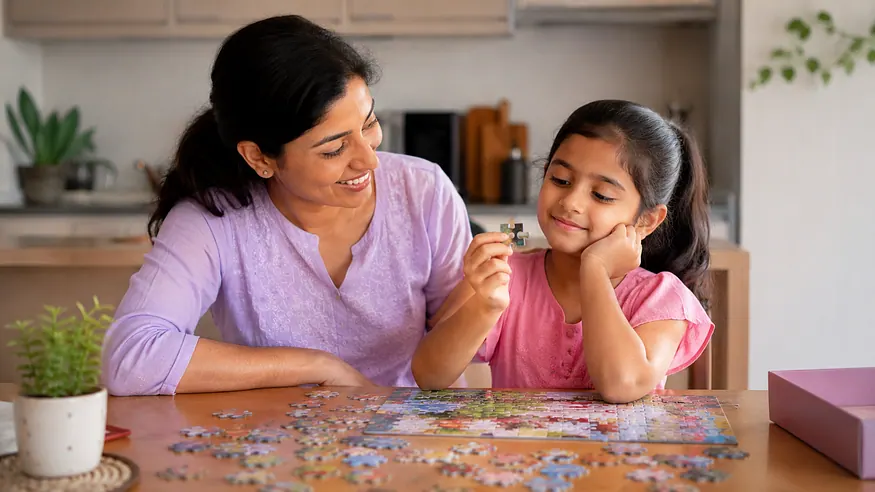
- Jigsaw Puzzles: Analogue puzzles are exceptional tools. The brain must look at a fragmented piece and visualise the whole picture to know where it belongs.
For Educators: Classroom Visual Accommodations
- Clean Copies Over Photocopies: A faded, fifth-generation photocopy is a nightmare for these students. Ensure they receive clear, high-contrast prints so the brain doesn’t have to struggle to “close” faded lines.
- Pre-Reading Strategies: Before asking a student to read a chapter, have them skim the page to circle words they recognise instantly. This “primes” the visual pathways before the heavy lifting begins.
For Paediatricians: Screening the “Slow” Reader
- The Incomplete-Form Audit: We advocate for checking visual processing markers during routine check-ups. Standard eye-chart tests do not catch this. Clinical screening should involve identifying shapes or letters with dashed or missing lines.
- Early Referrals: Clinicians should refer families to a Pediatric Occupational Therapist or a Developmental Optometrist for visual therapy before prescribing behavioural interventions.
What to Observe This Week: A Parent’s Checklist
- Decoding Fatigue: Do they sound out words they successfully read earlier on the same page?
- Partial-Object Blindness: Do they struggle to find an item (like a shoe) if it is partially hidden under a blanket?
- Erased-Board Struggles: Do they freeze if a teacher’s handwriting on the whiteboard is slightly smudged?
- Puzzle Avoidance: Do they actively avoid jigsaw puzzles or connect-the-dots activities?
When to Seek Professional Review
Consult your paediatrician or an occupational therapist if:
- Reading speed severely lags behind peers despite consistent phonics practice.
- The child experiences chronic headaches or rubs their eyes frequently during reading.
- They consistently fail to recognise familiar objects when they are partially covered.
- “Reading fatigue” leads to severe emotional meltdowns or school refusal.
Frequently Asked Questions
1. Can poor visual closure look like Dyslexia?
Yes. Both cause slow, halting reading. However, dyslexia is fundamentally a language-processing (phonological) challenge, while visual closure is a visual-perceptual issue. A proper assessment is required to distinguish the two.
2. Will more reading practice fix it?
Not necessarily. If the visual processing “hardware” is struggling, forcing more reading only increases frustration. The brain needs targeted visual exercises to build the neurological pathways first.
3. Does screen time affect visual closure?
Yes. Highly polished, high-definition digital media does the “closing” work for the brain. A brain that only interacts with perfectly rendered screens doesn’t get the practice it needs to decipher the “messy,” incomplete visual data of the real world.
The SKIDS Shield
Traditional check-ups focus on what a child can see on a wall, but they often miss how the brain processes that data.
SKIDS Advanced Discovery looks at the “Generalisation Engine.” By auditing visual processing markers, like visual closure, alongside academic feedback, we help you, your school, and your paediatrician identify the “Cognitive Tax” before it drains your child’s love of learning.
Is an uncalibrated visual filter holding back your child’s fluency?
[Explore SKIDS Advanced Discovery: The Path to a Smart Super Kid]