Plan together
Agree the screening scope, permissions and school-day arrangements. Give parents a clear explanation before screening begins.
Children bring their whole selves to school. SKIDS helps schools connect everyday wellbeing, health screening, family understanding and pediatric care. The purpose is a child who can learn, participate and grow, not simply a completed health check.
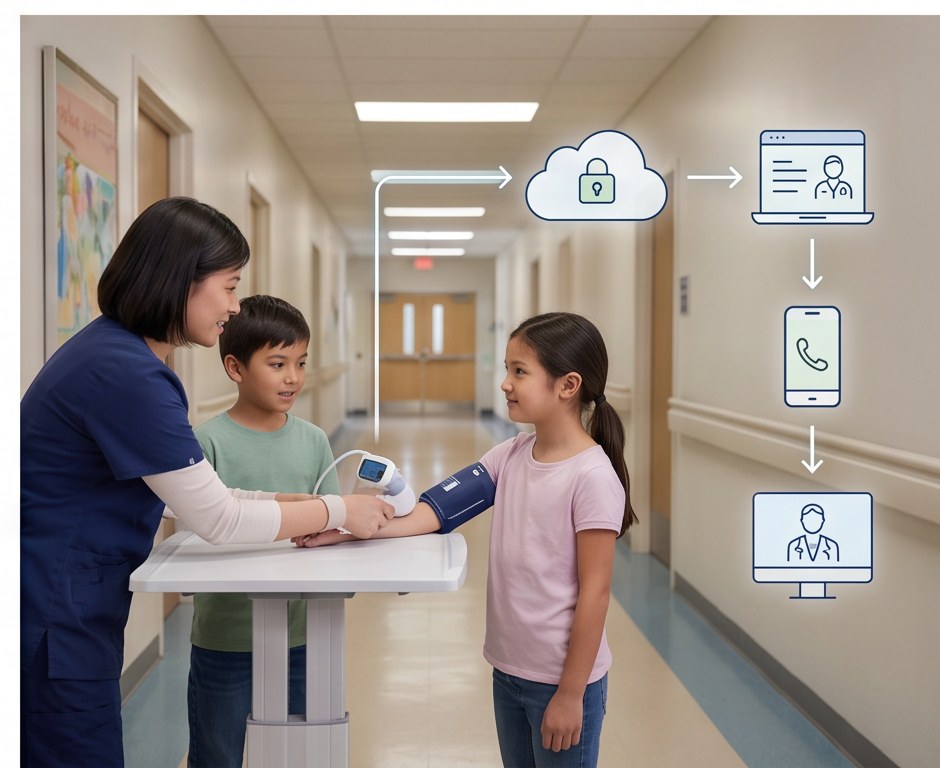
Teachers understand a child's everyday learning experience. Parents understand life at home. A pediatrician can put those observations into clinical context. SKIDS helps that conversation happen.
Agree the screening scope, permissions and school-day arrangements. Give parents a clear explanation before screening begins.
Bring child-health screening into the school relationship, with clinical review and reports families can understand.
Help families access their reports and connect findings to pediatric review. A screening day should have a next step.
School clinics and health programmes should fit the community they serve. Together we define clinical support, screening, family communication and follow-up for your school and local care network.
Clear consent, understandable findings and a route to clinical review. Families know whom to contact, rather than receiving an unexplained checklist.
A programme scope, school-day arrangements and defined responsibilities for communication and follow-up, with privacy boundaries agreed before work begins.
Plan the initial checks, follow-up conversations and review points together. Programme design and clinical availability are confirmed for your location.
WHO and UNESCO's global standards set out a whole-school approach to health and wellbeing, involving students, staff and the wider community. This is the wider context for connecting screening with support and follow-up.