
The Bangalore Monsoon Reality
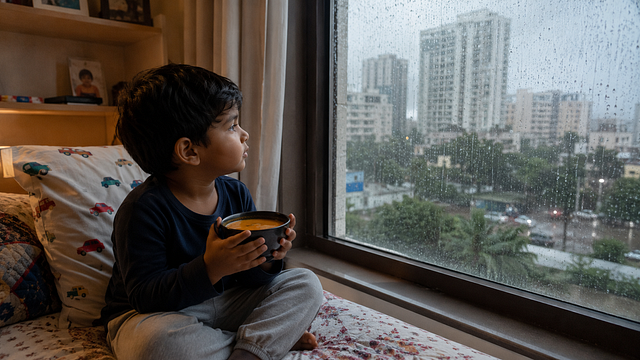
Meet Reyansh. He is four years old and lives in a breezy apartment in Bellandur, Bangalore. The heavy June showers have just arrived. The temperature has dropped from a warm summer high to a chilly, damp low. Reyansh wakes up at three in the morning with a deep, wet cough. His chest sounds like a rattling coffee machine. His mother sits beside him with a cup of warm water, wondering if this is a common cold, a seasonal allergy, or something that needs immediate antibiotics.
This scene is playing out across the city right now. The Bangalore monsoon brings beautiful weather and a much-needed break from the heat. But it also creates the perfect breeding ground for childhood respiratory issues. Understanding what exactly happens inside your child’s body is the first step to helping them heal peacefully at home.
The Science Behind the Monsoon Cough
Think of your child’s respiratory system like the intricate storm water drains lining the streets of our city. During normal, sunny weather, the air flows cleanly in and out of the lungs. The pipes are completely clear. When the monsoon arrives, it brings a sudden drop in temperature, high humidity, and a sharp spike in viral infections.
When a seasonal virus enters your child’s nose or throat, their immune system acts like a highly trained security team. It detects the intruder and immediately produces mucus. This mucus is a sticky, thick fluid designed to trap the viral particles, much like a dense net catching debris in a drain. But when there is an overwhelming amount of debris, the net gets full. The airway pipes get coated in this thick, heavy mucus.
The body naturally needs to clear this blockage out. The cough is simply the internal pump activating to push the trapped germs out of the pipes. That scary, rattling sound you hear in the middle of the night is actually a positive sign. It means the body is working exactly as it should to protect the deep lungs from a more serious infection.
Why the Bangalore Climate Adds Complexity
The specific weather patterns in Bangalore make this natural healing process a bit more challenging. The constant drizzle means clothes and shoes take much longer to dry. This leads to hidden mould growing inside the house. Closed windows prevent fresh air circulation, allowing viral particles to linger indoors for days. Dust mites also thrive in this high-humidity environment.
All these microscopic factors constantly irritate a child’s sensitive airways. This irritation leads to prolonged coughing even weeks after the initial virus has passed.
The Monsoon Stakeholder Blueprint
What parents should do
- Provide constant hydration. Warm water and clear soups act as a natural expectorant. They thin out the thick mucus so your child can cough it up easily without straining their chest muscles.
- Keep indoor air clean. Open the windows during dry spells to let fresh air circulate and drastically reduce indoor dampness.
- Avoid over-the-counter cough suppressants. The Indian Academy of Paediatrics strongly advises against giving cough syrups to young children. These medicines stop the natural pumping action needed to clear the lungs, effectively trapping the virus inside.
- Encourage sleep with a slightly elevated head position. Place an extra pillow under their mattress. This stops mucus from pooling in the back of the throat at night.
What educators should do
- Enforce a strict sick policy. Ask parents to keep children with a productive cough or a runny nose at home to prevent rapid classroom spread.
- Ensure classroom cross-ventilation. Keep windows partially open even on cloudy days to prevent stale, virus-laden air from accumulating.
- Monitor children after recess. The sudden transition from a damp playground to an air-conditioned classroom can trigger airway spasms in sensitive kids.
When to see a paediatrician
- Your child has a fever that lasts for more than three consecutive days.
- You notice fast breathing or see their chest muscles pulling in deeply with every single breath.
- The cough is so severe that it causes your child to vomit their food or milk repeatedly.
- Your child is unusually quiet, refuses to play, or simply has no energy for normal daily activities.
Your Daily Monsoon Cough Checklist
- Give your child a warm cup of herbal tea or clear vegetable broth one hour before bedtime to gently soothe the throat.
- Put two drops of saline water in each nostril before sleep to clear nasal blockages safely.
- Inspect the walls behind beds and cupboards for black mold spots that thrive in the monsoon humidity.
- Dry school uniforms, raincoats, and shoes completely using an iron or room heater to kill hidden fungal spores.
- Ensure your child washes their hands with plain soap and water immediately when they walk through the front door after school.
- Serve meals rich in vitamin C, like amla or citrus fruits, during the daytime to support their natural immune response.
- Check your child’s breathing rate while they are resting to ensure it is steady and completely unlabored.
- Change bedsheets and pillowcases twice a week and wash them in hot water to eliminate dust mites.
Frequently Asked Questions
Is it safe to give my child honey for a wet cough?
Yes. Honey is highly effective at soothing an irritated throat and calming a nighttime cough. The WHO supports the use of honey as a safe home remedy for children. You can give half a teaspoon of dark honey to your child right before they go to sleep. You must never give honey to a child under twelve months of age due to the rare risk of infant botulism.
Should I use a nebuliser every time the cough sounds rattling?
You should only use a nebuliser if your paediatrician explicitly prescribes it for a current illness. A rattling cough often just means there is loose mucus in the upper throat. Nebulisers are medical devices that deliver specific drugs to open up narrowed lower airways. Using them without a doctor’s strict guidance can cause unwanted side effects like a rapid heart rate or extreme jitteriness.
How do I know if this is a viral cough or a monsoon allergy?
Viral infections usually arrive with a clear sequence of symptoms. Your child might first get a low-grade fever, followed by a sore throat, a runny nose with thick mucus, and then a wet cough. Allergies behave very differently. A monsoon allergy triggered by mould or dust mites usually presents with continuous sneezing, itchy eyes, and a clear, watery nasal discharge, but it never causes a fever.
Book a SKIDS developmental screening at https://www.skids.clinic/