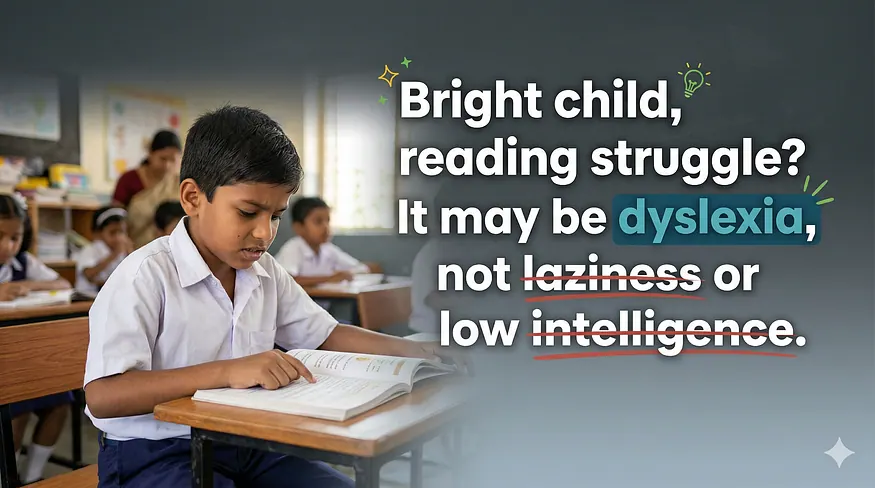

As the vibrant days of the summer break fade and a new academic year begins, parents look forward to their children seamlessly returning to school routines. However, a common hurdle emerges: a sudden, seemingly inexplicable decline in a child’s reading ability. Little Aarav, a bright seven-year-old, usually devoured books. But post-summer, his reading felt like an arduous chore. Why does a child who loved stories suddenly resist them? Parents worry their child is refusing to cooperate, but they may be experiencing reading regression. This is often a sign of underlying learning gaps exacerbated by the unstructured summer months.
Meet Aarav
Aarav, an energetic seven-year-old from Bengaluru, was known as an enthusiastic reader. He would often be found absorbed in his favourite adventure stories. However, just weeks after the summer break concluded, his parents noticed a stark decline in his once-fluent reading skills. He actively struggled to recognise familiar sight words, his ability to comprehend basic sentences plummeted, and he demonstrated a lack of interest in opening a book. Frustrated, his parents initially tried behaviour-first solutions. They scolded him, offered rewards for finishing a chapter, and consulted his teacher. Unfortunately, nothing worked.
What neither the parents nor the teachers fully realised was that Aarav wasn’t just being defiant. The silent culprit was summer learning loss, a well-documented phenomenon where children forget a substantial portion of what they successfully learned during the previous school year due to the lack of structured learning activities.
The Science Section
Understanding Summer Learning Loss
The concept of summer learning loss, frequently referred to as the summer slide, affects a vast majority of children. Educational studies suggest students can lose up to three months of reading skills over a single summer vacation. This academic regression can be directly attributed to a lack of daily engagement in reading activities, limited access to books, and the absence of a structured, intellectually stimulating learning environment.
Key Mechanism
The fundamental biological mechanism behind this summer learning loss lies rooted in the brain’s natural tendency to prune information that is not actively utilized. The brain operates heavily on a use-it-or-lose-it principle. When children are not consistently engaged in reading tasks, their developing brains do not receive the ongoing neural stimulation required to retain, strengthen, and build upon previously acquired phonetic skills. Neural pathways associated with decoding text become dormant.
Shadow of Misdiagnosis
Because the symptoms can be incredibly pronounced, summer learning loss can unfortunately be misdiagnosed as a permanent learning disability or a neurodevelopmental disorder, such as dyslexia or ADHD. Parents might panic, seeing their child’s lack of focus as a lifelong challenge. However, it is essential to understand that summer reading regression is a highly common and reversible phenomenon. With patience, pedagogical strategies, and emotional support, these lost skills can be rapidly recovered.
Early Childhood Experiences Shape Later Outcomes
We must recognise that early childhood experiences, including routines established during summer breaks, play a significant role in shaping a child’s later academic and cognitive outcomes. By proactively providing children with engaging, continuous learning activities year-round, parents and caregivers can effectively help prevent this drastic summer learning loss. This proactive approach ensures that children do not spend the new academic year playing catch-up, ultimately setting them up for immediate confidence.
Stakeholder Blueprint
For Parents: The ‘Reading Revival’ Approach
Parents are the first line of defence and can actively help their children overcome this summer learning loss by implementing the ‘Reading Revival’ approach. This involves intentionally setting aside dedicated, uninterrupted time for reading every single day. Crucially, it means providing easy access to a diverse variety of high-interest books — letting the child choose comics or non-fiction — and making the reading process a fun, engaging, and pressure-free bonding experience rather than a strict academic chore.
For Educators: The Classroom ‘Reading Renewal’ Approach
Educators and classroom teachers can support returning students who have inevitably experienced this summer slide by implementing a structured ‘Reading Renewal’ approach. This proactive strategy involves immediately assessing students’ current reading levels without judgment, providing targeted phonetic support, and seamlessly incorporating highly engaging, low-stakes reading and storytelling activities into the classroom curriculum to gently rebuild foundational confidence.
For Paediatricians: Screening the ‘At-Risk’ Child
Paediatricians and family doctors play a vital role by identifying young children who are at a heightened risk of prolonged summer learning loss. During routine wellness checks, doctors should screen for subtle signs of reading difficulties, asking targeted questions about a child’s struggles with basic word recognition, paragraph comprehension, and reading fluency to effectively rule out underlying vision, hearing, or real developmental issues.
Parent’s Checklist: What to Observe This Week
If you suspect your child is struggling, use this ‘Reading Regression’ Checklist:
- The Interest Level: Is your child actively avoiding books, making excuses to skip reading time, or showing an uncharacteristic lack of interest in stories they previously loved?
- The Comprehension Level: Is your child struggling to accurately summarise what they read, or absolutely failing to comprehend simple sentences and paragraphs?
- The Fluency Level: Is your child suddenly stuttering, or consistently sounding out previously known sight words without their normal rhythm and accuracy?
When to Seek Paediatric Review
If your child is experiencing persistent reading difficulties that do not organically improve after a few consecutive weeks of establishing a consistent daily routine, it is essential to seek a formal paediatric review. A qualified paediatrician can comprehensively assess developmental reading skills, thoroughly rule out any underlying physiological issues, and provide evidence-based guidance to best support their unique reading journey.
Frequently Asked Questions
Q: What is summer learning loss?
A: Summer learning loss refers to the documented decline in a child’s academic skills, specifically reading and mathematics, that naturally occurs when children are not consistently engaged in structured learning activities during the summer break.
Q: How can I prevent summer learning loss?
A: You can actively prevent summer learning loss by consistently providing your child with engaging, pressure-free structured activities, such as participating in local library reading programs, playing interactive math games, and conducting simple science experiments.
Q: What are the signs of summer learning loss?
A: The most common signs include a sudden decline in reading fluency, a significant drop in foundational math calculation skills, decreased reading comprehension, and an overall academic reluctance upon returning to school.