
The Hurried Child Syndrome: Signs & Pediatric Care
Does your child jump from school to coding class, then straight to soccer, only to end the day in tears over a minor setback? In our race to provide every advantage, we may be triggering “Hurried Child Syndrome”, a state of chronic nervous system activation that subtly limits a child’s true developmental potential.
Understanding Hurried Child Syndrome
In 2026, the modern childhood calendar is often as dense as a corporate itinerary. While extracurricular activities offer wonderful learning opportunities, back-to-back scheduling strips away the “white space” that a child’s developing brain desperately needs to process daily inputs. When a child is continuously moved from one high-demand environment to the next, their body interprets this pacing as a constant state of urgency.
The Biology of Chronic Rushing
From a physiological standpoint, a hurried routine triggers a low-grade, continuous release of stress hormones, primarily cortisol and adrenaline. The nervous system shifts out of the “rest and digest” (parasympathetic) state and into a mild “fight or flight” (sympathetic) state. Over time, this chronic activation reduces the brain’s ability to transition between tasks, leading to the “friction” parents often encounter during bedtime or morning routines.
Emotional Dysregulation vs. “Bad Behaviour”
Often, the exhaustion of an over-scheduled child is misinterpreted as defiance or an attention disorder. A child who “melts down” because their sandwich was cut incorrectly is rarely being difficult; their nervous system is simply at capacity. They are experiencing Emotional Dysregulation — a state where the prefrontal cortex (responsible for logic and patience) is temporarily overridden by the amygdala (the emotional centre) due to biological fatigue.
Programming Stress Baselines
The Barker Hypothesis highlights how early-life environmental factors create a permanent biological blueprint for the future. If a child’s nervous system is programmed in a high-stress, “always-on” environment, it establishes a baseline of Hyper-Vigilance.
In adulthood, this physiological blueprint increases the risk of chronic anxiety, burnout, and cardiovascular strain. By introducing intentional pacing today, we help the child build a resilient, adaptable nervous system. Furthermore, adjusting the daily pace aligns with the Heckman Equation: investing in emotional regulation and adequate recovery yields a compounding return on a child’s long-term cognitive and social capabilities.
A Unified Pacing Strategy
To cultivate resilience, parents, educators, and paediatricians must collaborate to protect the “white space” in a child’s life.
For Parents: Reclaiming “White Space”
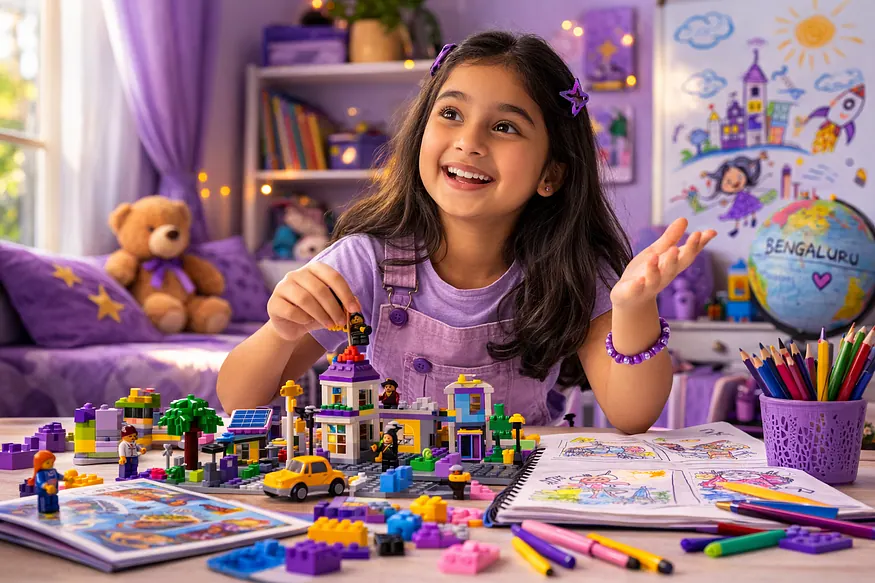
- The 48-Hour Audit: Track your child’s schedule for two days. How many minutes are truly unstructured? Unstructured play is the brain’s natural mechanism for problem-solving.
- Buffer Zones: Implement a mandatory 15-minute “buffer” between activities. Avoid screens or instructions; let the child rest or simply be. This allows the nervous system to “close one tab” before opening another.
- Connection Over Correction: When a meltdown occurs, ground the child physically (a hug, a calm voice, or a glass of water) before addressing the behaviour logically.
For Educators: The Mindful Classroom
- Transition Rituals: Schools can integrate calm transitions between subjects, such as one minute of deep breathing or stretching, to signal safety to the nervous system.
- Homework Harmonisation: Progressive schools are prioritising the quality of homework over quantity, ensuring children have time for familial connection and restorative rest.
For Paediatricians: Screening the Nervous System
- Beyond the Physical: During wellness visits, a comprehensive review should include the family’s daily rhythm. Recognising signs of somatic stress such as unexplained stomach aches or tension headaches can guide families toward a more balanced schedule.
Checklist: Signs to Observe This Week
- The “Sunday Scaries”: Physical signs of anxiety (stomach aches, irritability) the evening before the school week begins.
- Sleep Latency: Lying awake for more than 30 minutes, unable to “switch off” an active brain.
- Loss of Joy in Play: Disinterest in hobbies they once loved, opting only for passive screen time.
- Transition Friction: Moving from one activity to another consistently met with crying, arguing, or physical resistance.
When to Seek Pediatric Review
Consult your paediatrician or a child development specialist if:
- Meltdowns are increasing in frequency, duration, and intensity, disrupting daily family life.
- Physical symptoms persist, such as chronic headaches, nausea, or significant appetite changes.
- Persistent withdrawal from social interactions or an inability to enjoy previously loved activities occurs.
- Sleep architecture is severely disrupted (frequent night waking, night terrors, or chronic early rising).
Frequently Asked Questions
How many extracurricular activities are “too many”?
There is no universal number. It depends entirely on your child’s unique biological capacity. If they are consistently irritable, struggling to sleep, or resisting attendance, it is likely time to scale back.
Isn’t boredom bad for children?
Quite the opposite. Boredom is the precursor to creativity. When children are constantly directed, they lose the opportunity to practice self-directed play, which is crucial for executive function.
Will my child fall behind if they do fewer activities?
No. An exhausted brain cannot efficiently encode new memories or skills. A well-rested child with one or two meaningful activities will outperform an exhausted child juggling five.
The SKIDS Shield
Traditional check-ups often miss the early markers of chronic stress and nervous system fatigue. A SKIDS Discovery Audit utilises our AI-powered Behavioural Radar to help visualise the impact of an environment on your child’s emotional battery. We help you and your paediatrician identify whether “fussy” behaviour is actually a biological call for a slower pace.
Is your child’s internal battery running on empty? Ensure their future is built on resilience, not just speed.
[Explore SKIDS Advanced Discovery: The Path to a Smart Super Kid]