
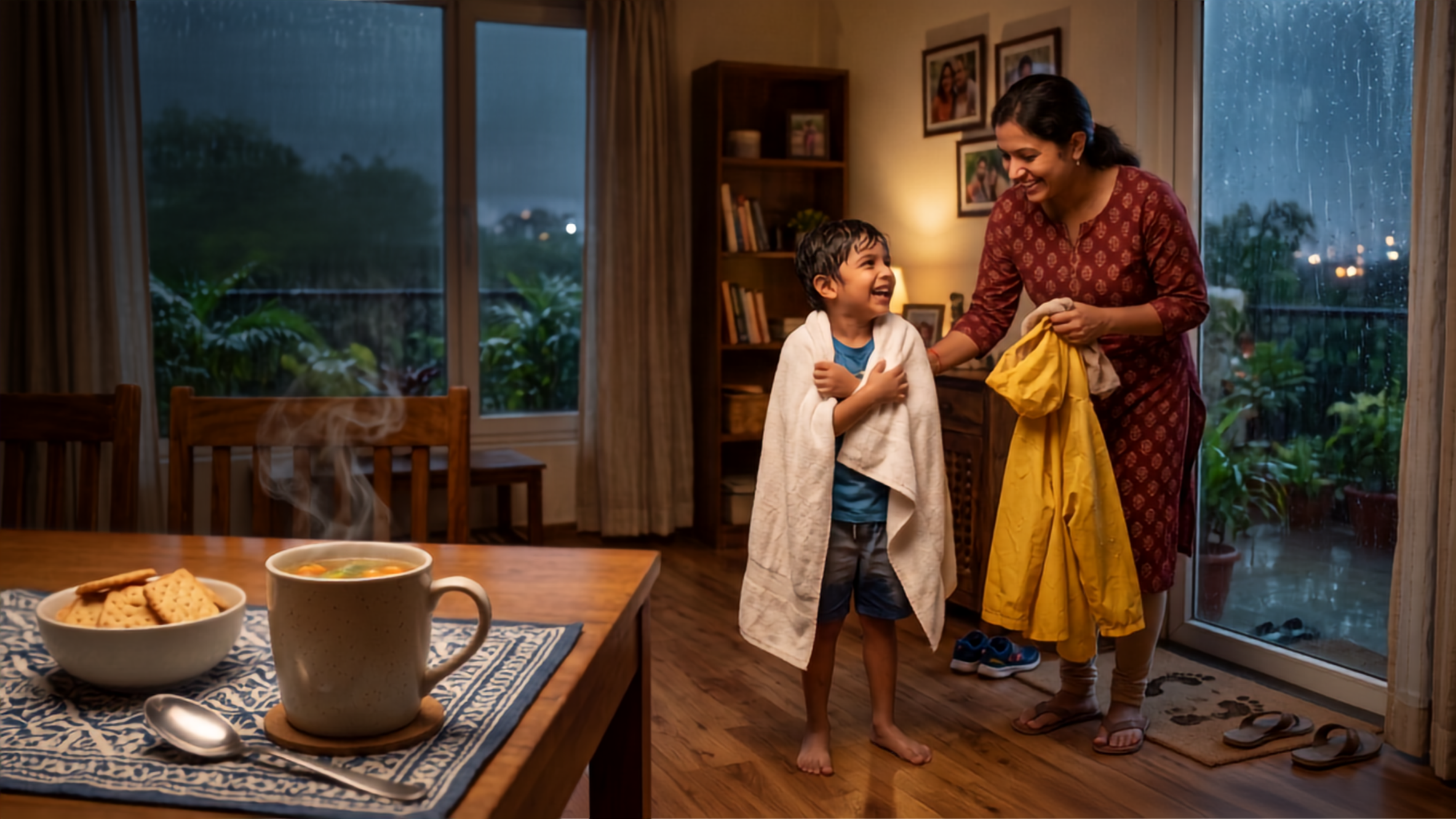
Advik, a 6-year-old from HSR Layout, Bengaluru, waits all summer for the first monsoon showers. Last Tuesday, after happily splashing through puddles outside his apartment, he woke up the next morning with a high fever and a dry cough. His parents rushed him to the pediatrician.
This is a familiar story across Bengaluru every rainy season. While the rains bring cooler weather, they also bring an increase in viral infections, mosquito-borne illnesses, stomach infections, and respiratory illnesses among children.
The good news? Most monsoon illnesses are preventable with a few simple daily habits.
What May Be Happening
Rain itself doesn't cause infections. Viruses, bacteria, and mosquitoes do.
Think of your child's airways as a tunnel lined with millions of tiny microscopic "brooms" called cilia. These constantly sweep away dust, allergens, and germs. During sudden shifts from warm weather to cool, damp conditions, these tiny cleaners work less efficiently. At the same time, increased humidity allows many viruses to survive longer indoors.
The combination means your child's natural defenses temporarily become less effective while germs become more successful at spreading.
During Bengaluru's monsoon, pediatricians commonly see:
Viral fevers
Common cold and influenza
Stomach infections and diarrhea
Dengue
Malaria
Typhoid
Seasonal allergies and asthma flare-ups
Children also spend more time indoors during rainy days, increasing close contact and making respiratory viruses spread more easily.
Why It Matters
Monsoon illnesses can progress quickly if early warning signs are missed.
Beyond temporary fever or cough, infections like dengue, dehydration from diarrhea, and severe respiratory illnesses can require urgent medical attention.
Simple preventive measures make a significant difference:
Serve freshly cooked warm meals.
Drink boiled or filtered water.
Eliminate stagnant water around the home.
Keep vaccinations, including annual influenza vaccination, up to date.
Encourage regular handwashing.
Dress children in breathable clothing that dries quickly.
Ensure classrooms remain well ventilated.
Monitor school absenteeism for clusters of illness.
A consistent prevention routine protects not only one child but the entire family and school community.
What To Observe This Week
- Watch for these early signs during the rainy season:
- Fever lasting longer than two days
- Persistent cough or breathing difficulty
- Vomiting or diarrhea
- Poor appetite
- Reduced urine output
- Extreme tiredness
- Severe headache
- Pain behind the eyes
- Skin rash or unusual bruising
- Refusal to drink fluids
- Daily monsoon checklist for parents:
- Boil drinking water and store safely.
- Remove stagnant water from balconies, buckets, and plant pots.
- Apply pediatrician-approved mosquito repellent.
- Trim fingernails regularly.
- Give children a warm bath after getting wet.
- Dry and iron damp school uniforms thoroughly.
- Keep ORS packets, a thermometer, and prescribed fever medicine available at home.
When To Seek Pediatric Review
- Arrange a pediatric evaluation promptly if your child has:
- Fever above 101°F (38.3°C) lasting more than 48 hours.
- Fast breathing or chest retractions.
- Severe body aches or pain behind the eyes.
- Rash, bruising, or bleeding.
- Persistent vomiting.
- Refusal to drink fluids for more than six hours.
- Extreme sleepiness or difficulty waking.
- Signs of dehydration such as dry mouth, sunken eyes, or reduced urination.
- These symptoms require prompt medical assessment rather than home observation.
How SKIDS Thinks About This
At SKIDS, we believe prevention begins long before illness appears.
Seasonal infections often expose underlying issues such as poor nutrition, inadequate sleep, allergies, asthma tendencies, or delayed growth that may reduce a child's ability to recover quickly.
Our clinician-led screening provides a broader understanding of your child's overall health, including growth, nutrition, sleep patterns, hearing, vision, and developmental wellbeing. Rather than waiting until repeated illnesses occur, families receive practical guidance that supports healthier seasons throughout the year.
Understanding your child's baseline health allows parents to respond earlier, make informed decisions, and build stronger long-term immunity through healthy routines.
FAQ
Is it safe for children to play in the rain?
Yes. Playing in the rain can be enjoyable and beneficial for physical activity. Keep playtime limited to about 15–20 minutes, avoid outdoor play during thunderstorms, and ensure your child changes into dry clothes and takes a warm bath afterward.
How do I know if it is dengue or a normal viral fever?
Common viral infections usually include cough, runny nose, and sore throat. Dengue often begins with sudden high fever, severe headache, body pain, pain behind the eyes, vomiting, and sometimes rash or bruising. Any suspected dengue symptoms should be assessed by a pediatrician immediately.
My child gets frequent colds whenever the weather changes. What helps?
Frequent viral infections are common in younger children as their immune systems mature. Prioritize balanced nutrition, adequate sleep, regular physical activity, hand hygiene, and recommended vaccinations. If repeated infections are associated with wheezing, ear infections, or poor growth, discuss further evaluation with your pediatrician.
Can warm foods really help during monsoon?
Warm, freshly prepared meals reduce the risk of consuming contaminated food and support hydration and comfort during illness. Safe food handling and clean drinking water remain the most important protective measures.