Start with your setting.
Agree the population, existing services, local requirements and what success should mean for children and families.
Families, schools, clinicians and institutions each see a different part of a child's life. SKIDS connects those perspectives with pediatric care, from birth through adolescence.
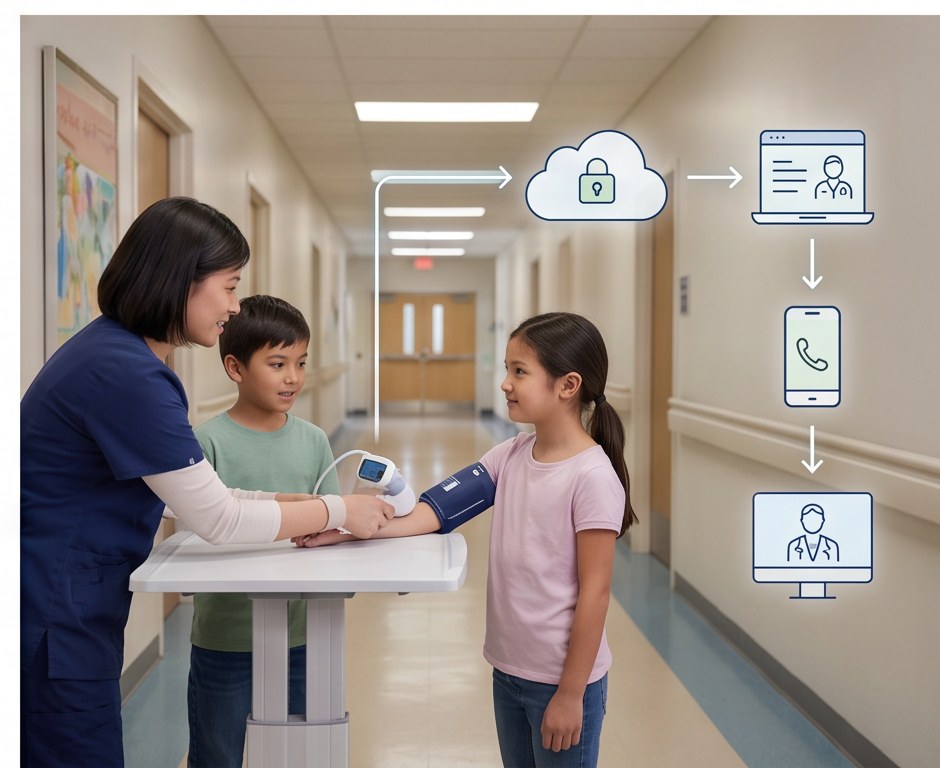
A programme should connect understanding, clinical assessment, appropriate treatment and follow-up. We plan that whole pathway with partners, including who takes responsibility for the next step.
School clinics, screening and family engagement linked to pediatric follow-up. Support the child behind the classroom experience.
Explore school partnerships → Pediatricians, clinics & hospitalsExplore specialty pathways, shared follow-up and clinical collaboration, with clear professional responsibilities.
Explore clinical partnerships → CorporatesDiscuss pediatric wellbeing for employee families or a community child-health initiative. Shape access and continued care around the population you serve.
Discuss a corporate programme → Governments & public programmesExplore child-health programmes that strengthen existing teams: assessment, family communication, referral follow-through and programme-level insights with appropriate data governance.
Discuss a public-health programme →A child-health programme can give families a clearer route to pediatric advice and continued care. For community initiatives, that same principle starts with access.
Employee families: explore pediatric consultations, family education and planned health reviews around your workforce's needs.
Community programmes: define an outreach population and a care pathway that continues beyond the event.
Agree participation, referral follow-through and family feedback as programme measures. Employers should not receive individual children's clinical records.
Build around the services and teams already caring for children. The partnership conversation begins with local priorities, referral capacity and families' ability to access care.
Define the population, assessment scope, clinical oversight and referral responsibilities together. Plan consent, data access and local requirements before implementation.
Track participation, completed reviews and referral follow-through. Aggregate reporting should help teams improve the programme without exposing children's identities.
Agree the population, existing services, local requirements and what success should mean for children and families.
Define clinical scope, consent, communication, referral arrangements and follow-up before a programme begins.
Look beyond participation counts to whether families understood the advice and could reach the recommended care.
Our Bengaluru clinic and regional offices provide points of contact for care and partnerships. We are developing GCC partnerships, including opportunities in the UAE and Qatar. Contact the regional team to discuss available programmes and local clinical arrangements.