
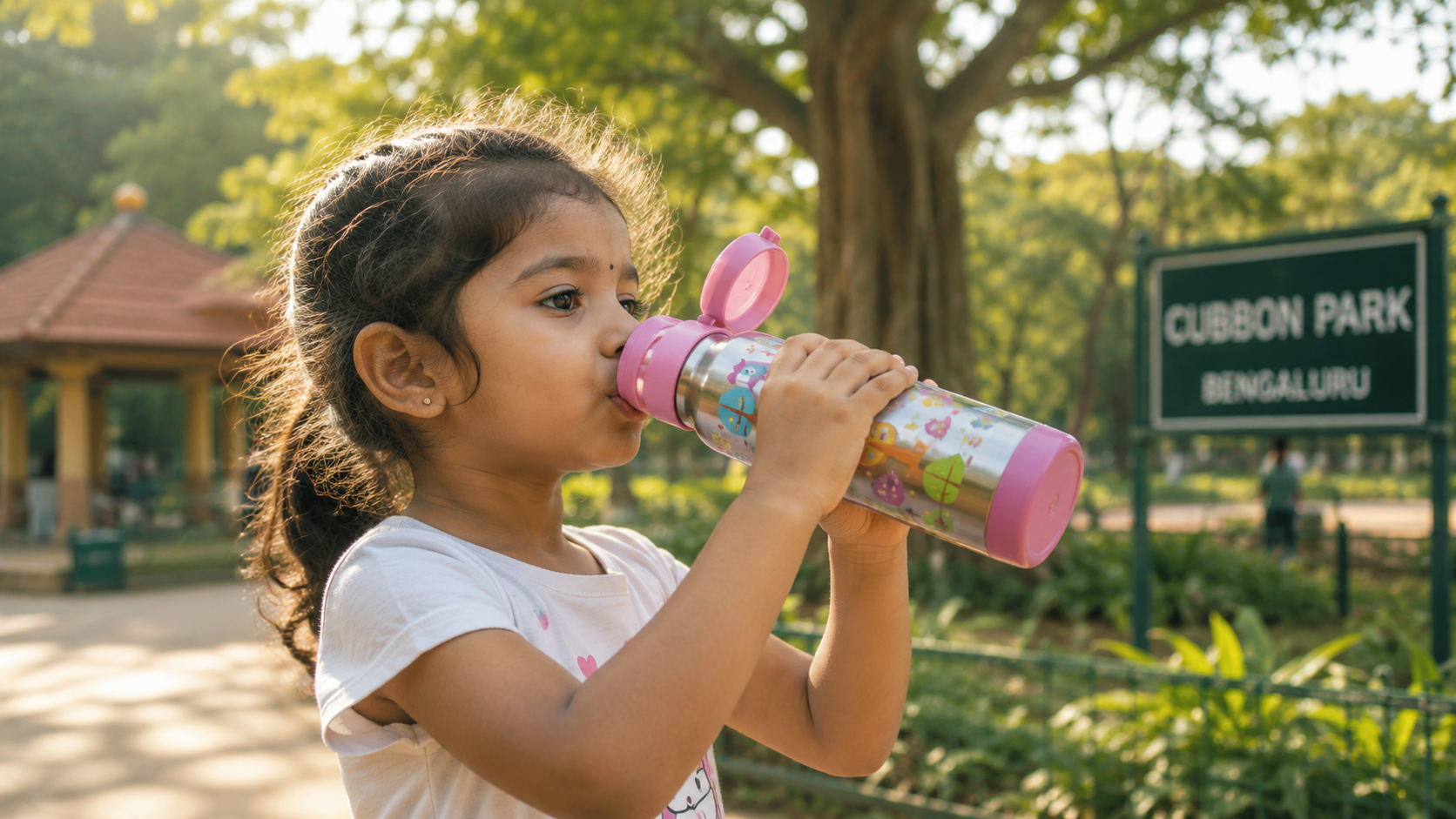
Four-year-old Aanya loves her evening playtime at Cubbon Park in Bengaluru. But after a particularly warm April afternoon, she came home unusually tired and irritable. Her face was flushed, she refused her evening snack, and she complained of a headache. Her mother worried she might be developing a viral infection. In reality, Aanya was experiencing mild dehydration.
Many parents associate dehydration with extreme heat, but Bengaluru's dry summer weather and long hours of outdoor play can quietly deplete a child's fluid reserves. Because children lose fluids faster than adults and often become absorbed in play, they may not recognize or communicate thirst until dehydration has already begun.
What May Be Happening
Think of your child's body like a young plant sitting in the afternoon sun. Water keeps every part of the plant functioning properly. Without enough water, the plant begins to droop and struggle.
A similar process happens inside your child's body. Water forms a large portion of their blood. When they sweat out more fluid than they replace, blood volume decreases and circulation becomes less efficient. The heart has to work harder to deliver oxygen and nutrients throughout the body, leading to tiredness, weakness, and reduced physical performance.
The brain is also highly dependent on proper hydration. Even mild dehydration can contribute to headaches, irritability, reduced concentration, and mood changes. What may appear to be crankiness or fatigue is often the body's early warning signal that more fluids are needed.
Why It Matters
Hydration is essential not only for physical activity but also for learning, concentration, and healthy growth. Children who remain under-hydrated may experience reduced attention span, lower energy levels, and decreased participation in school and sports activities.
Schools and parents can work together to support healthy hydration habits.
What educators can do:
• Schedule regular water breaks during classroom activities and sports sessions.
• Avoid prolonged outdoor physical activity during the hottest part of the day.
• Encourage children to carry accessible water bottles and refill them regularly.
• Watch for signs such as lethargy, headaches, reduced concentration, or unusual irritability.
Consistent hydration supports healthy brain function, physical coordination, and overall wellbeing.
What To Observe This Week
- Watch for these practical signs and habits at home:
- Offer water regularly instead of waiting for your child to ask for it.
- Monitor urine color. Pale yellow generally indicates good hydration, while dark yellow or amber suggests a need for more fluids.
- Track how often your child finishes their water bottle during the day.
- Include water-rich foods such as watermelon, cucumber, oranges, muskmelon, and yogurt.
- Summer Hydration Checklist:
- Pack water along with buttermilk (chaas) or tender coconut water when appropriate.
- Dress children in lightweight, breathable cotton clothing.
- Encourage drinking a glass of water before outdoor play.
- Limit sugary soft drinks and sweetened beverages.
- Add natural flavor to water with lemon, mint, or fruit slices if needed.
- Ensure regular hydration during sports practices and outdoor activities.
When To Seek Pediatric Review
- Consult a pediatrician promptly if your child:
- Has not urinated for more than six hours.
- Produces very dark yellow or amber-colored urine.
- Has a dry mouth, sunken eyes, or cries without tears.
- Appears unusually sleepy, confused, or difficult to wake.
- Is unable to keep fluids down due to vomiting.
- Shows worsening symptoms despite drinking fluids.
- Early medical assessment can prevent mild dehydration from progressing into a more serious condition.
How SKIDS Thinks About This
At SKIDS, we believe hydration is one of the simplest yet most overlooked aspects of child health. Small changes in hydration status can affect a child's energy levels, concentration, mood, and physical performance.
Our developmental and health screening programs help identify early physiological concerns before they impact learning, growth, or overall wellbeing. By combining preventive screenings with continuous monitoring, we help families build healthier routines that support long-term child development.
Parents can also use hydration and nutrition tracking tools to monitor daily habits and identify patterns before they become health concerns.
FAQ
Q. How much water does my child need during summer?
Water requirements vary by age, activity level, and weather conditions. Most school-age children need regular fluid intake throughout the day, with additional fluids during outdoor play, sports, or hot weather. Encourage frequent drinking rather than large amounts all at once.
Q. Are sports drinks necessary after outdoor play?
For most children, plain water is sufficient. Tender coconut water, buttermilk, or homemade electrolyte-rich drinks are usually adequate for replacing fluids after routine outdoor activities. Commercial sports drinks are often high in sugar and are generally unnecessary.
Q. What are the earliest signs of dehydration?
Common early signs include thirst, dry lips, tiredness, irritability, headaches, reduced appetite, and darker urine. Recognizing these symptoms early can help prevent progression to more severe dehydration.
Q. Can fruits help keep children hydrated?
Yes. Water-rich fruits such as watermelon, muskmelon, oranges, and cucumber contribute to daily fluid intake and provide valuable vitamins and minerals.