
screening domains in the Premium Programme
For parents · a school-led programme
Schools make learning possible. SKIDS helps make the conditions visible.
Teachers and parents do the daily work of helping children learn. SKIDS adds a calm, pediatrician-reviewed health view around the school day—so a hidden signal is less likely to be mistaken for poor effort or ability.
A school circular can share this page as the parent explainer.
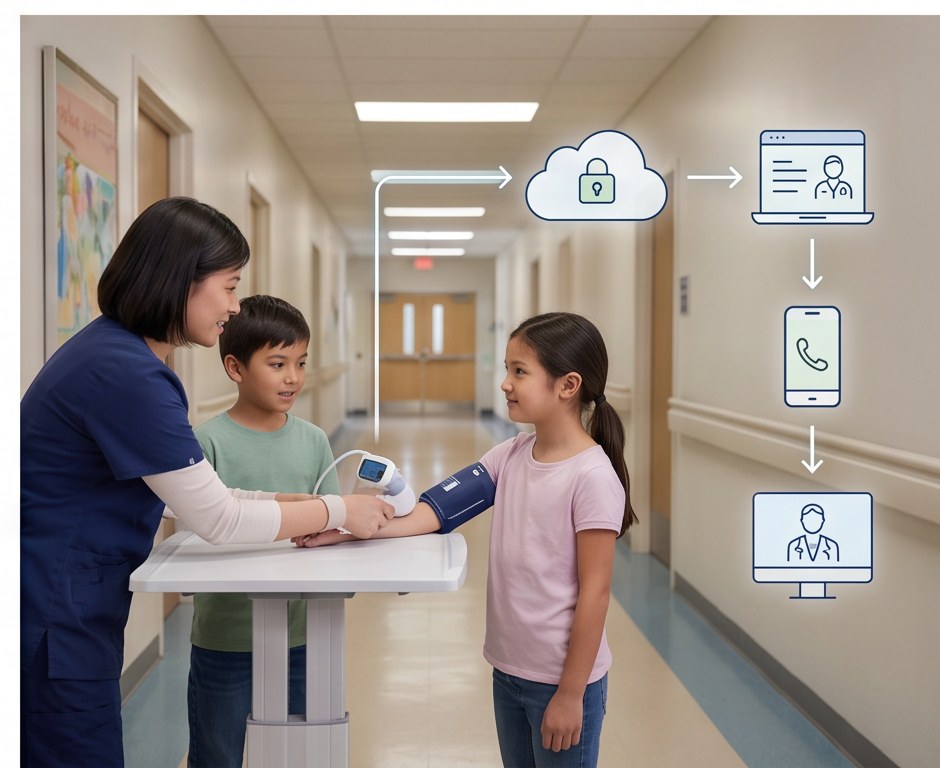
clear stages from school day to parent report
report window after screening is complete
pediatrician review before a report is released
*Exact timing depends on your school programme, class flow, and checks included.
120,000+screenings completed by SKIDS teams
Experience matters when a school wants a clear, repeatable experience for families.
SKIDS programme total; this describes screening activity, not diagnoses or guaranteed outcomes. School · home · care
Start with the child who is learning.
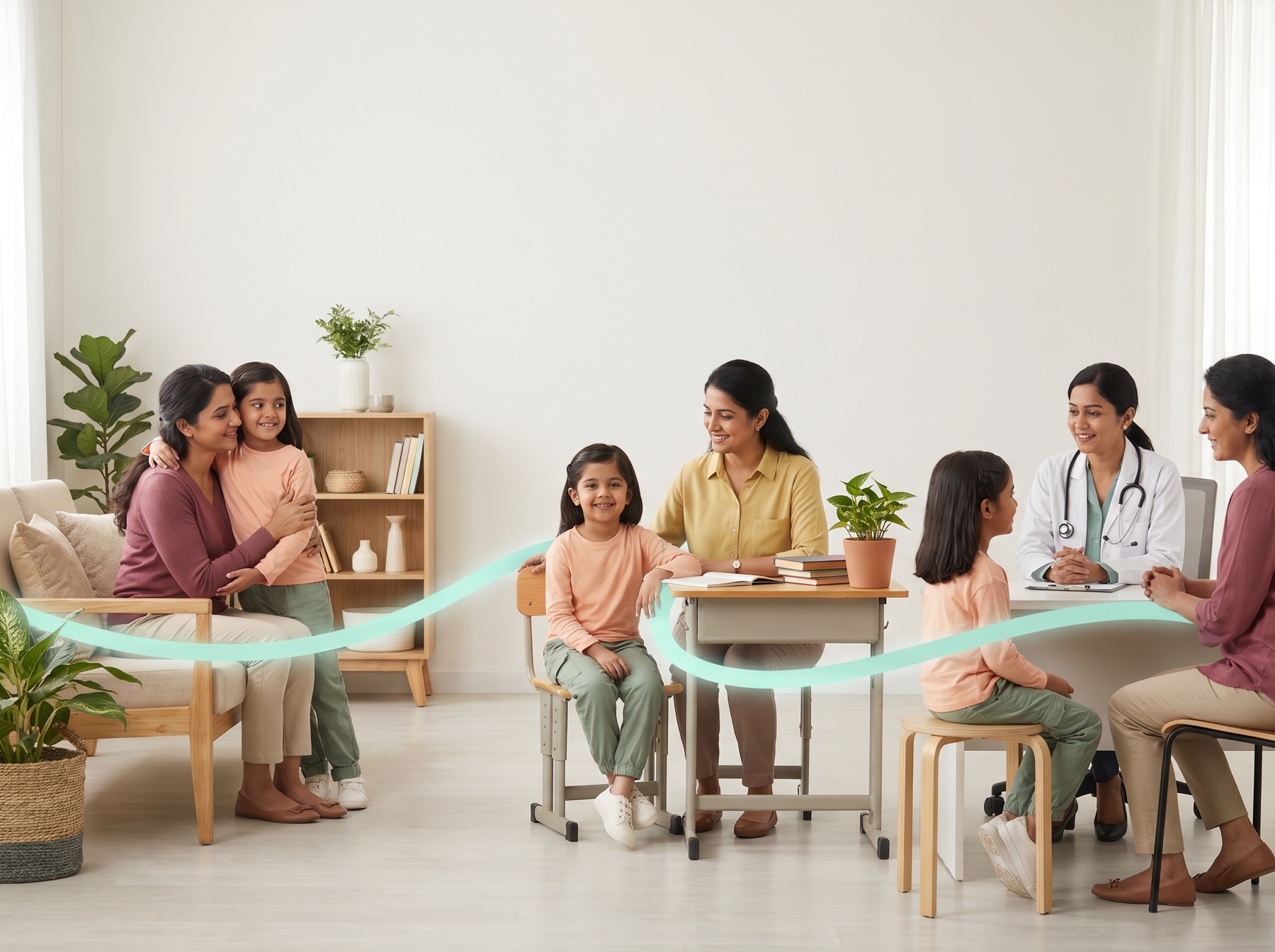
Schools see learning in motion. Parents bring home context. Five visual moments show how SKIDS helps join those views—without taking the place of either one.
A parent’s view Scene 1 of 5
 Context before conclusion 01
 The school day
School is where learning comes alive.
Teachers see the child taking in lessons, joining in, and responding.
Start here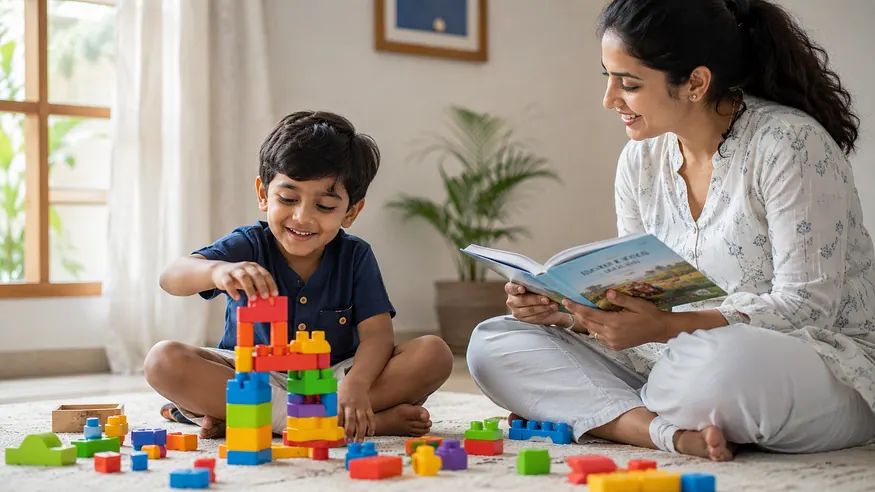
Swipe on a phone · use ← → on a keyboard
Prefer to scan? The detailed sections below keep the same information available in one page.
School health, worldwide
Different systems. A similar principle.
The details vary by country, age, consent model, and health system. The shared idea is simple: schools are one of the few places that can connect children, families, educators, and health services early and fairly. This is not a judgement on effort or ability; it is one way to notice whether a preventable barrier may be making learning harder.
ThenWait for a problem
Health and learning were often handled separately.
NowNotice and support
Bring useful signals into view before they become a bigger barrier.
NextKeep the loop open
Connect the school day to parents, pediatricians, and the child’s record.
01New Zealand
Consent-led follow-up Vision and hearing can be checked at school when a child misses the pre-school check.
New Zealand’s national protocols describe school-based follow-up after consent, with repeat screening for children who need another check.
Ministry of Health · National Vision and Hearing Screening Protocols02Japan
A school-year rhythm Health checks are part of the school year—and results can guide support.
Japan’s Ministry of Education describes annual school health checks, identifying issues that may affect school life, notifying families, and recommending medical review where appropriate.
MEXT · School Health Activities03Europe
Whole-school health Health-promoting schools connect learning, wellbeing, policy, and community.
WHO/Europe’s network brings countries and partners together around whole-school approaches that integrate health and wellbeing into learning environments and community partnerships.
WHO/Europe · European Network for Health-Promoting Schools04UAE
A national framework A national guideline covers school health from KG1 through Grade 12.
The UAE’s Ministry of Health and Prevention describes annual examinations, early detection, referral, follow-up, and standardised school health screening across public and private schools.
MoHAP · National School Health Screening GuidelineThese are examples of public health and education approaches, not endorsements of identical methods or outcomes. SKIDS’ exact checks and consent process are set by your school programme.
Why school health?
The school sees the learning. The family sees the conditions.
Children spend much of their day at school, where teachers see how they receive instructions, join activities, and respond. Parents see sleep, energy, comfort, and effort at home. When those views meet, a hidden health or sensory signal is less likely to be mistaken for poor performance.
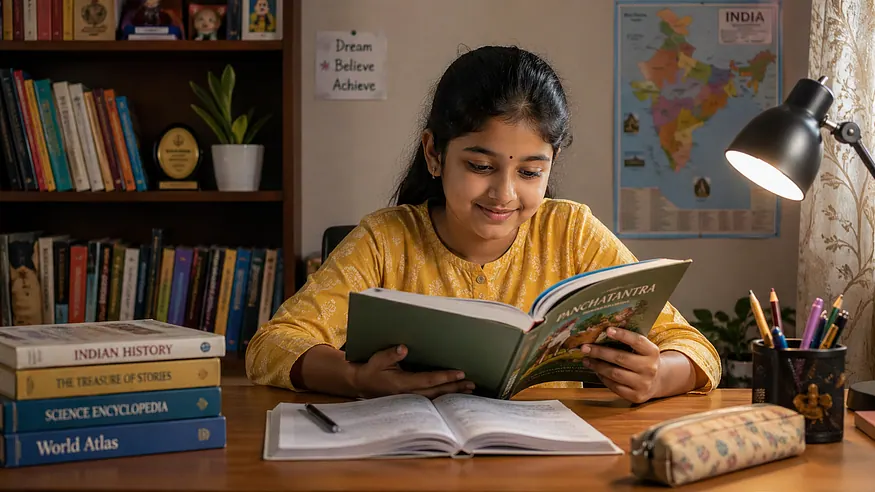
The school sees learning in motion.
Teachers see board work, listening, stamina, participation, and peer life. Parents see mornings and evenings. Together, those views tell a fuller story without replacing either one.
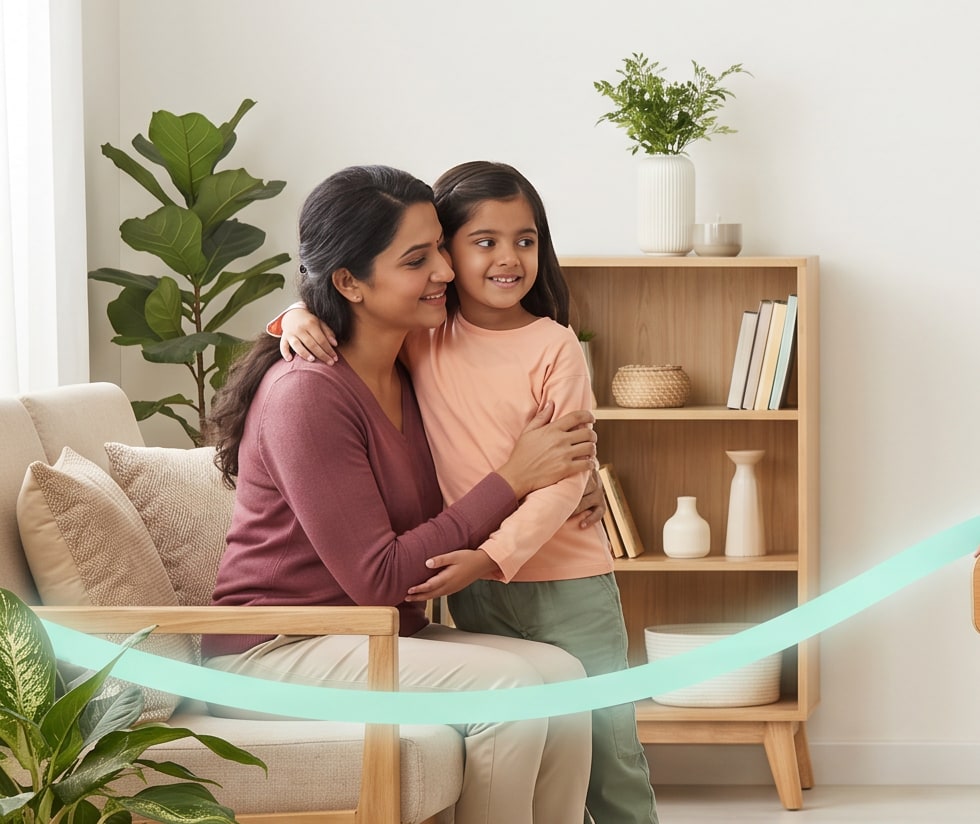
A small signal can change the question.
A child who struggles to see, hear, stay comfortable, or regulate may appear distracted or behind. Better information can move the conversation from blame to practical support.
What the evidence says
Learning has more room when hidden friction is understood.
WHO, UNESCO, and CDC evidence connects coordinated school-health programmes with learning-related outcomes. That is a reason to notice possible barriers early—not a promise that one screening will change a report card.
higher probability of passing standardised reading and maths tests in one WHO/UNESCO example of school vision screening plus glasses.
average increase in attendance associated with nutritious school meals in WHO/UNESCO examples.
countries included in the evidence and consultation behind WHO/UNESCO health-promoting school standards.
The parent view
From school day to useful next step.
The process has a beginning, a clinical review, and a clear hand-off to you. No dramatic reveal. Just a better sequence for noticing and acting.
01
Prepare
The school sets a calm window.
The school shares the schedule, space, roster, and parent communication. SKIDS handles the screening-station setup and equipment.
02
Screen
Your child moves through brief checks.
Children are seen class by class during school hours* by trained SKIDS technicians, with the programme designed to minimise disruption to learning.
03
Review
A pediatrician looks at the report.
Every parent-facing screening report is reviewed and validated by a licensed pediatrician before it is released.
04
Receive
You get a clear next step.
Within 2–4 weeks* after screening is complete, your school or SKIDS shares a digital report explaining what was observed and what to discuss next.
What may be included
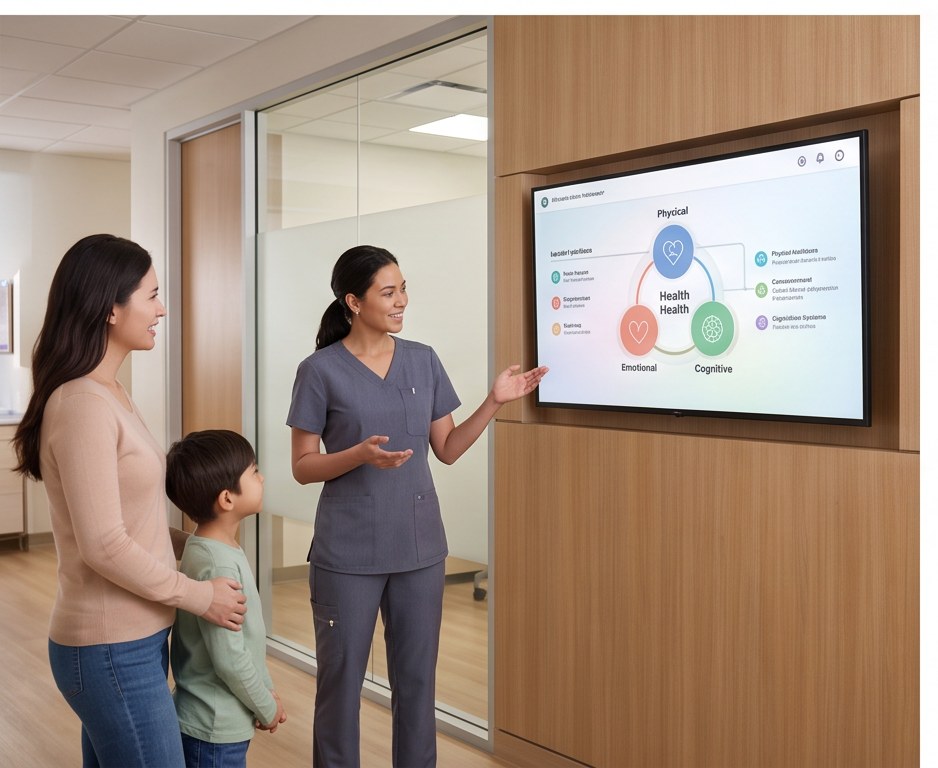
A wider view of the child.
The Premium Programme looks across six connected areas. The goal is not to search for problems everywhere; it is to avoid reducing a child to one number or one classroom moment.
01
Eyes and vision
Vision signals, including refractive error and other findings that may merit a closer look.
02
Ears and hearing
Hearing-related observations, including wax, foreign-body, or ear-health findings.
03
Mouth and dental health
Mouth, throat, dental, gum, tonsil, and orthodontic indicators.
04
Vitals, heart and lungs
Heart rate, blood pressure, BMI, and digital heart/lung sound assessment where included.
05
Skin and haemoglobin
Skin observations and non-invasive SpotHb screening as part of the Premium Programme.
06
Behaviour and learning
Indicators related to anxiety, internet use, dyslexia, dyscalculia, and dysgraphia—to support discussion, not to name a condition.
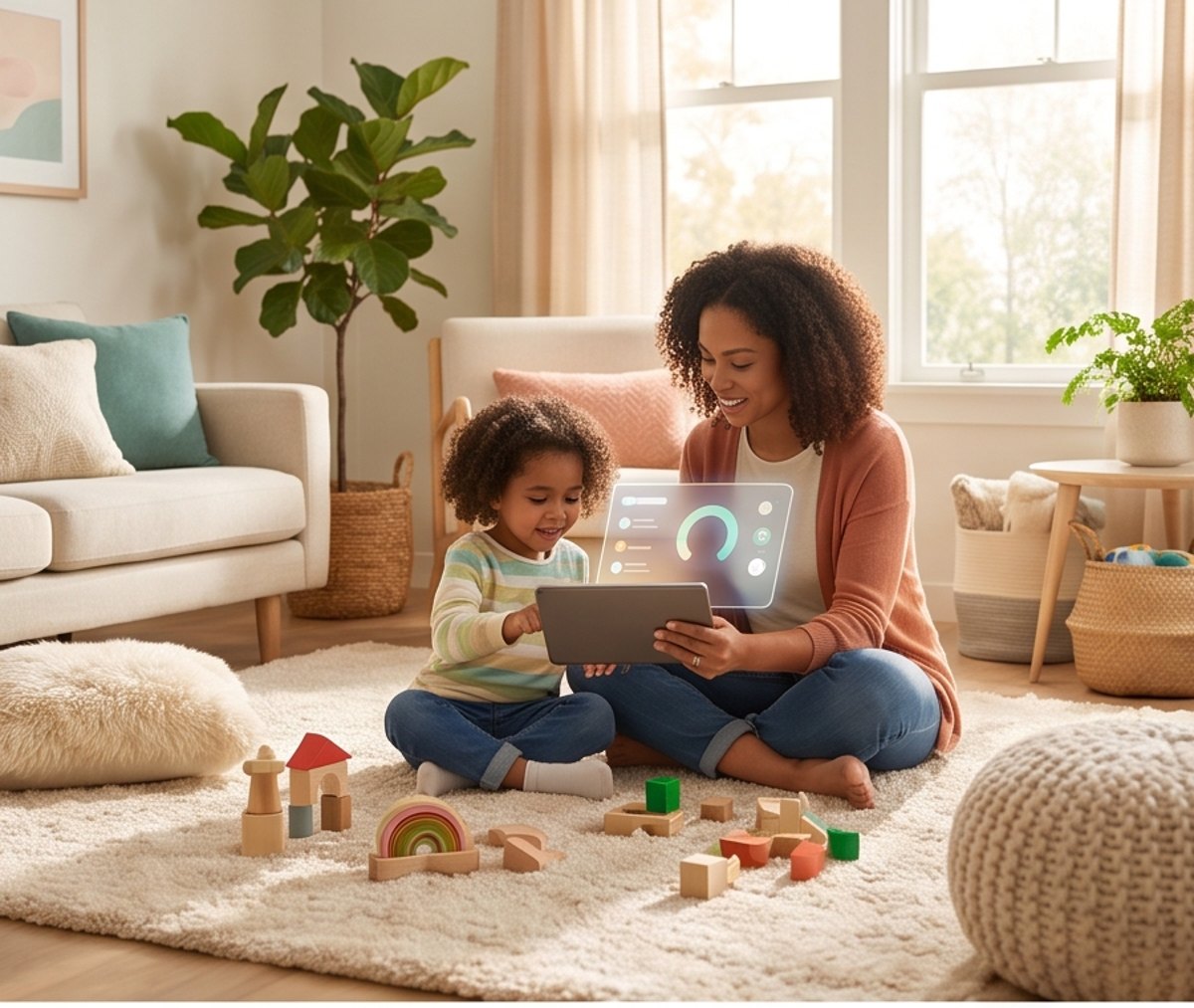
Child-firstObserve · measure · explain
Non-invasive where specified
What the day feels like
Brief, calm, and designed for a school day.
The programme combines observations and measurements; it is preventive screening, not treatment. The Premium Programme specifically describes SpotHb screening as non-invasive. Methods vary by domain, and your school’s consent communication explains the checks planned for your child.
LookListenMeasureExplain
The learning engine
Before a child can show learning, the signal has to get through.
School learning is a loop: information comes in, a child processes it, and then responds. When a sensory or health signal adds friction, the same classroom task may take more effort. SKIDS helps adults notice selected signals early so the question can be more useful.
This is a simple learning model, not a measure of intelligence or a diagnosis.
01Input
See · hear · sense
A lesson enters through vision, hearing, body, and language.
02Processing
Attend · organise · make meaning
Attention, memory, and regulation help a child work with it.
03Response
Read · write · speak · move
The child responds in the ways a school can see and support.
04Learning
Make room for potential
When a possible barrier is understood, adults can discuss practical support.
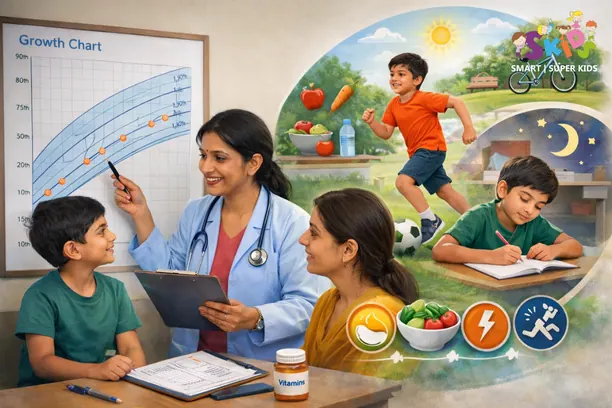
Your child’s visual report
A fuller health view, alongside the school report card.
The school report card shows what a child has learned. The SKIDS report adds selected health and learning signals around the school day—so parents and pediatricians can see what was checked and decide what, if anything, to discuss next.
01Whole-child overviewSelected areas brought together.
02Signal detailObservations and measurements in context.
03Next conversationPediatrician review before release.
Illustrative collage from SKIDS report and parent-app visuals. Exact checks, fields and timing depend on your school programme.* Screening is preventive; it is not a diagnosis or a substitute for regular pediatric care.
One visual report · parent app
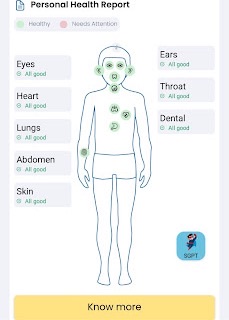
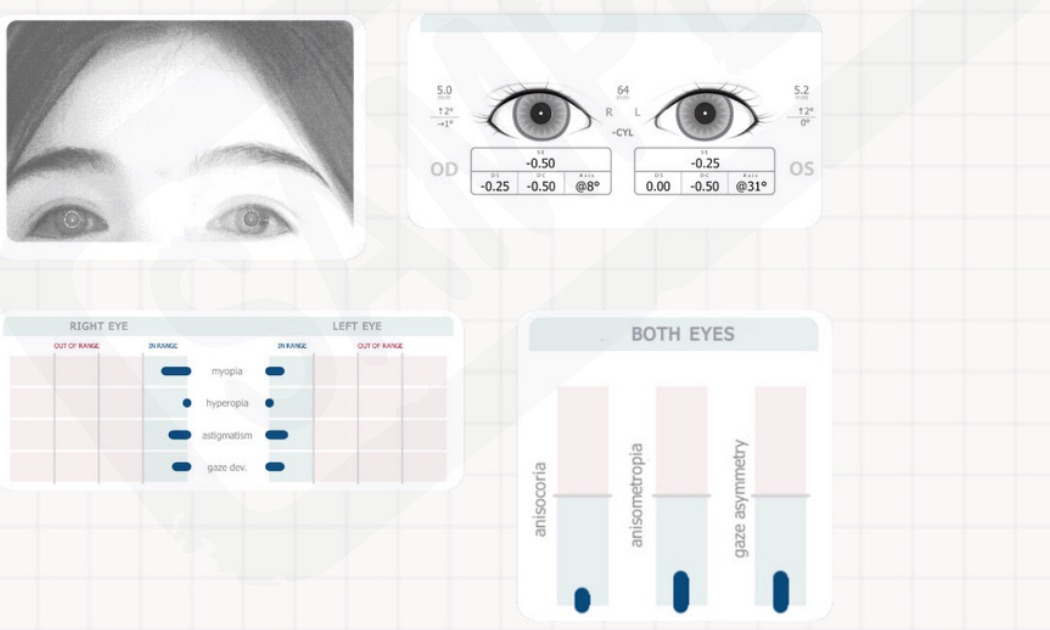
Selected areasSee · hear · growOne view for a family conversation
Before releasePediatrician reviewedContext before next steps
School · parent · pediatrician
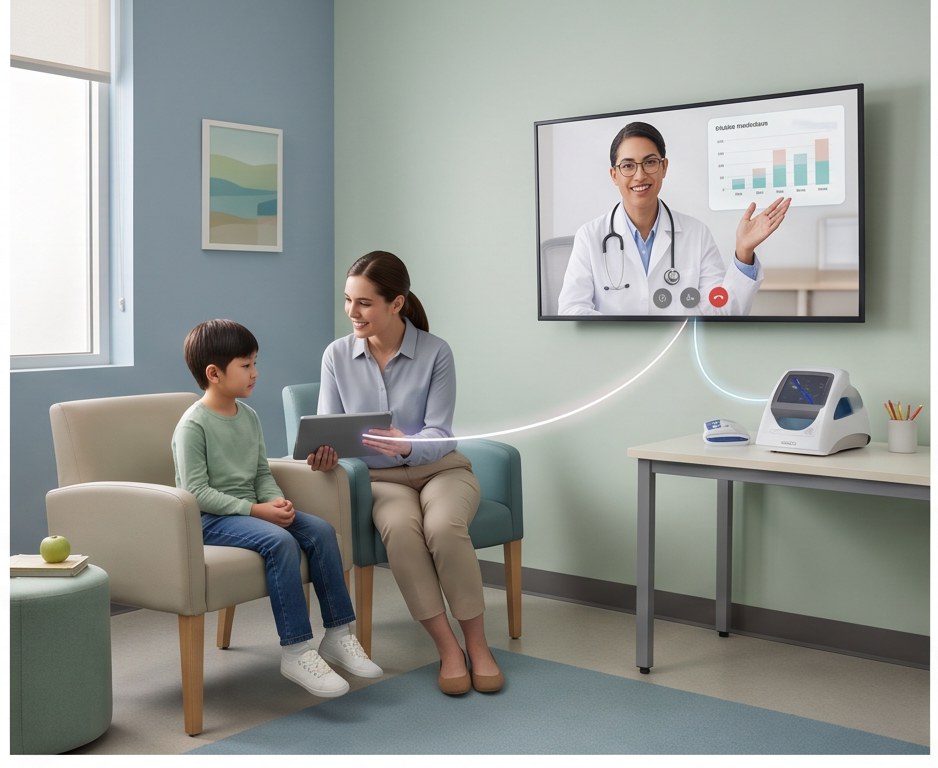
The school leads. The care loop supports the child.
Schools keep doing the vital work of teaching and nurturing. Parents receive the individual report. A pediatrician validates it and helps interpret any next step. SKIDS connects these roles without replacing any of them.
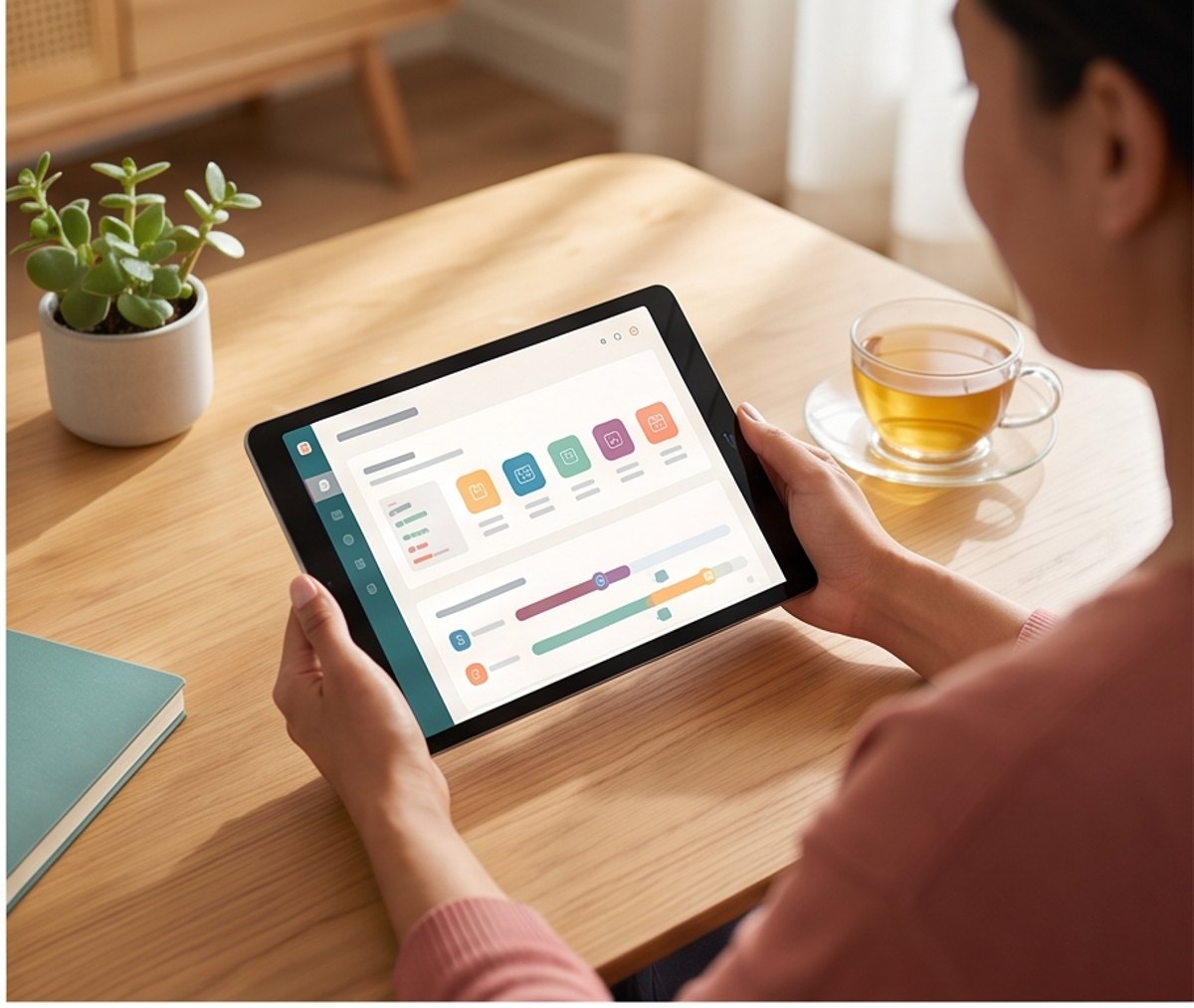
SKIDSParent record
A
Your childGrowing health story
✓Screening reportPediatrician validated
NowParent observationReady for the next conversation
Next Keep support moving
One report can support the next conversation.
The pediatrician-validated report can become part of a growing SKIDS Personal Health Record, where enabled for your school. Registered parents can also use parent.skids.clinic and the SKIDS Parent app for daily blogs, habits, and digital parenting resources.
When you need a person
If something is flagged, you have a next conversation—not a verdict.
Read the report, then share it with the pediatrician you choose. SKIDS support can help with report access or workflow questions; a qualified physician decides whether your child needs repeat screening, diagnostic testing, treatment, or no further action.
Email SKIDS support[email protected]↗ Speak to the team+91 73771 12777↗
For dates, consent, or participation, contact your school health coordinator first.
Consent and privacy
Clarity before participation.
Your school’s registration and consent communication explains the planned checks, dates, and local contact. Read it before deciding whether your child should participate, and ask the coordinator about anything that is unclear.
SKIDS handles on-site equipment and logistics. Individual parent reports are shared digitally after pediatrician validation. The school-level dashboard described in the Premium Programme is aggregated and anonymised.
*Exact timing depends on your school programme, class flow, and checks included. This page explains the screening workflow in plain language. The school’s consent form, programme communication, and signed agreement govern the exact scope for your child.
Read SKIDS privacy informationCBSE01×annual health check-up context
Why schools talk about health records
A parent explainer for a school responsibility.
CBSE’s public affiliation material says schools should arrange a medical check-up for students at least once every year and keep a proper record. The wider context includes Health and Activity Card reporting under the NEP 2020 Holistic Progress Card (HPC) framework; the exact format is school-specific.
Circular: Acad-10/2018 · Ref: CBSE/ACAD/JS(A&T)/2018 · Issued: 21 March 2018
Bye-Laws: effective 18 October 2018 · Chapter 14, Clause 14.6
CBSE Affiliation Bye-Laws · Clause 14.6 CBSE annual report · Acad-10/2018 · Ref CBSE/ACAD/JS(A&T)/2018 CBSE affiliation context · bye-laws effective 18 October 2018
These references are regulatory context, not an endorsement or compliance certificate for SKIDS. The school remains responsible for its own policies and communication.
Parent questions
Good questions make the day easier.
Keep this page with the school circular. If your question is about your child’s individual report, use the support details in the report or speak to your pediatrician.
Why is my child being screened at school?+
A school screening is a preventive first look at selected health and learning-related signals in the setting where children spend much of their day. It can help a parent notice what may be worth discussing with a qualified physician; it is not a diagnosis.
How can health affect learning?+
Health can affect attendance, concentration, energy, and access to classroom instruction. WHO and UNESCO cite examples where school vision screening plus glasses was associated with a 5% higher probability of passing standardised reading and maths tests. This is evidence about a coordinated intervention, not a promise that one screening will change a child’s grades.
What do sensory systems have to do with learning?+
Learning involves receiving information through systems such as vision, hearing, body senses, and language; processing it with attention, memory, and regulation; and responding through reading, speaking, writing, movement, or problem-solving. Screening can add context about selected inputs, but it cannot measure intelligence or diagnose a learning difference.
Do other countries use school health checks?+
Yes, in different ways. New Zealand describes consent-led school follow-up for missed vision and hearing checks; Japan describes annual school health checks; WHO/Europe supports whole-school health approaches; and the UAE has a national school health screening guideline. These examples show the value of linking schools and health, not that every programme has the same scope or result.
What may be included in the SKIDS Premium Programme?+
The programme may include eyes and vision; ears and hearing; mouth, throat and dental health; vital signs, heart and lungs; skin and non-invasive SpotHb screening; and behaviour and learning indicators. The exact scope and consent details for your school are in the school communication kit.
Will the screening hurt or involve treatment?+
The school programme is designed as a brief, child-friendly screening experience, not a treatment or emergency procedure. Methods can vary by check and school programme. Your school’s consent communication explains the planned checks; the Premium Programme specifies non-invasive SpotHb screening.
Does a flagged result mean my child has a condition?+
No. A flagged result is a screening signal, not a diagnosis. It may reflect a temporary issue, a measurement that needs repeating, or something worth checking in more detail. Please discuss a flagged finding with a qualified physician.
What does a normal or unflagged result mean?+
It is reassuring for the signals checked on that occasion, but it cannot guarantee that every health condition is absent. Continue routine pediatric care and speak with your doctor if you have an ongoing concern.
How long will screening take?+
Screening is conducted class by class during regular school hours* and is designed to minimise disruption to the academic timetable. The agreement does not promise one fixed number of minutes for every child, because the flow depends on the school schedule and the checks included.
When will I receive my child’s report?+
The school agreement provides for pediatrician-validated digital reports within 2–4 weeks* after screening is complete. The school or SKIDS will tell you how the report will be delivered and where to ask for support.
Who reviews the screening report?+
SKIDS states that all screening reports are reviewed and validated by a licensed pediatrician before they are released to a parent. Trained technicians conduct the on-site screening, and devices are subject to quality-control processes such as calibration and audit.
Does SKIDS use artificial intelligence?+
Some parts of the workflow may use AI-assisted analysis to support signal review. AI does not replace pediatrician review, and no report should be released without pediatrician validation. AI-assisted flags can over- or under-flag and are not diagnoses.
Will the school see my child’s medical information?+
The Premium Programme describes a pediatrician-validated digital report for the parent and an aggregated, anonymised school-level dashboard. The school’s parent communication and consent process explain the information flow for your programme; contact the school coordinator if you want to clarify access.
What happens if the report suggests follow-up?+
A flagged finding is a reason to pause and discuss, not a reason to panic. Read the report, note the recommended next step, and consult a qualified physician who can examine your child and decide whether repeat screening, diagnostic testing, treatment, or no further action is appropriate.
Can I share the report with our own pediatrician?+
Yes. If a result is flagged, you can share the pediatrician-validated report with the qualified pediatrician you choose. SKIDS support can help with report access or workflow questions; your pediatrician decides whether any clinical evaluation or treatment is needed.
What can registered parents use the SKIDS Parent app for?+
Registered parents can use parent.skids.clinic and the SKIDS Android app for their child’s available health record and reports, plus daily blogs, habit resources, and digital parenting guidance. The app supports continuity; it does not replace a pediatrician’s clinical judgment.
What if I have a question about consent or the screening date?+
The school’s nominated health coordinator or class point of contact is the right first contact for dates, participation, space, and consent. SKIDS manages the equipment, layout, and on-site logistics under the school programme.
Is school screening a substitute for a pediatric visit?+
No. School screening is preventive support. It does not replace regular pediatric care, clinical diagnosis, or emergency medical treatment. If your child is acutely unwell, follow the school’s emergency process and seek appropriate medical care.
Healthy Kids. Healthy Nation.
Schools make the future possible. Together, we help children take part in it.
Schools do the vital work of teaching. Parents bring care home. SKIDS helps add early visibility around selected health and learning signals, so the right conversation can happen at the right time.